
Ongoing CRO, performance, and Shopify maintenance for brands that have outgrown their current setup. We treat your store like a product, not a project.
Avg CVR lift
Faster page-load
Shopify Online Store
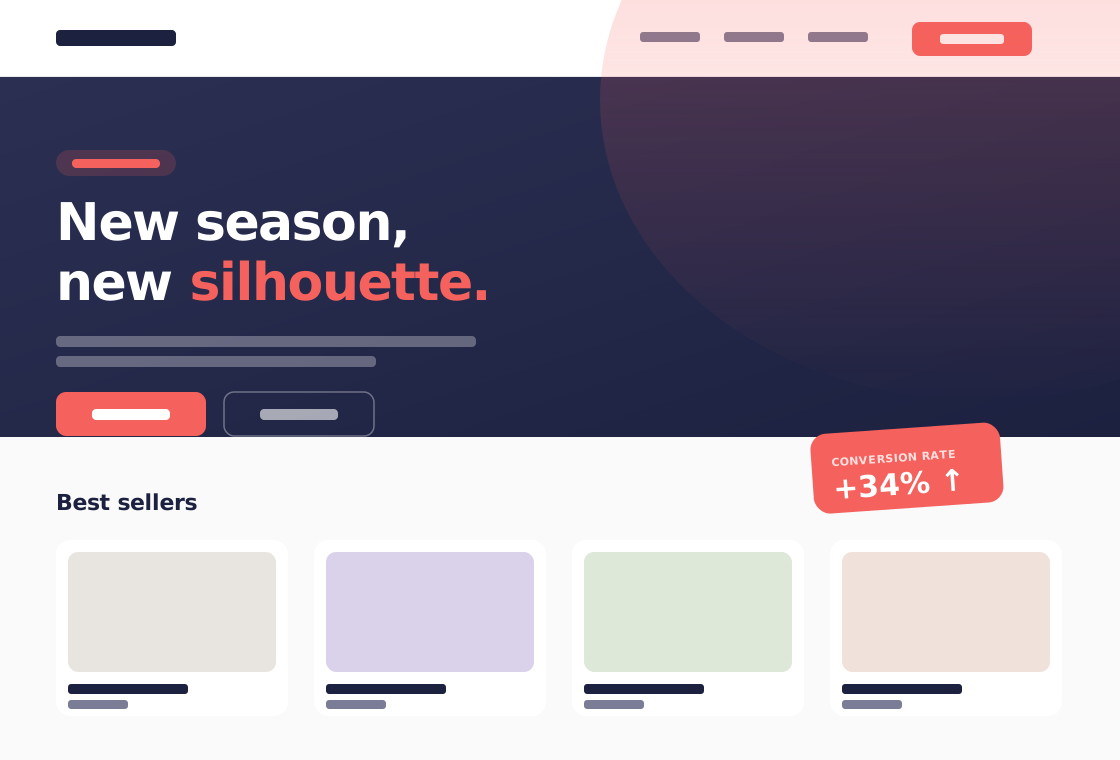
A growing store is a moving target. Every quarter brings new traffic, new products, new ad costs — and small frictions that compound into lost revenue. We help you find them and fix them.

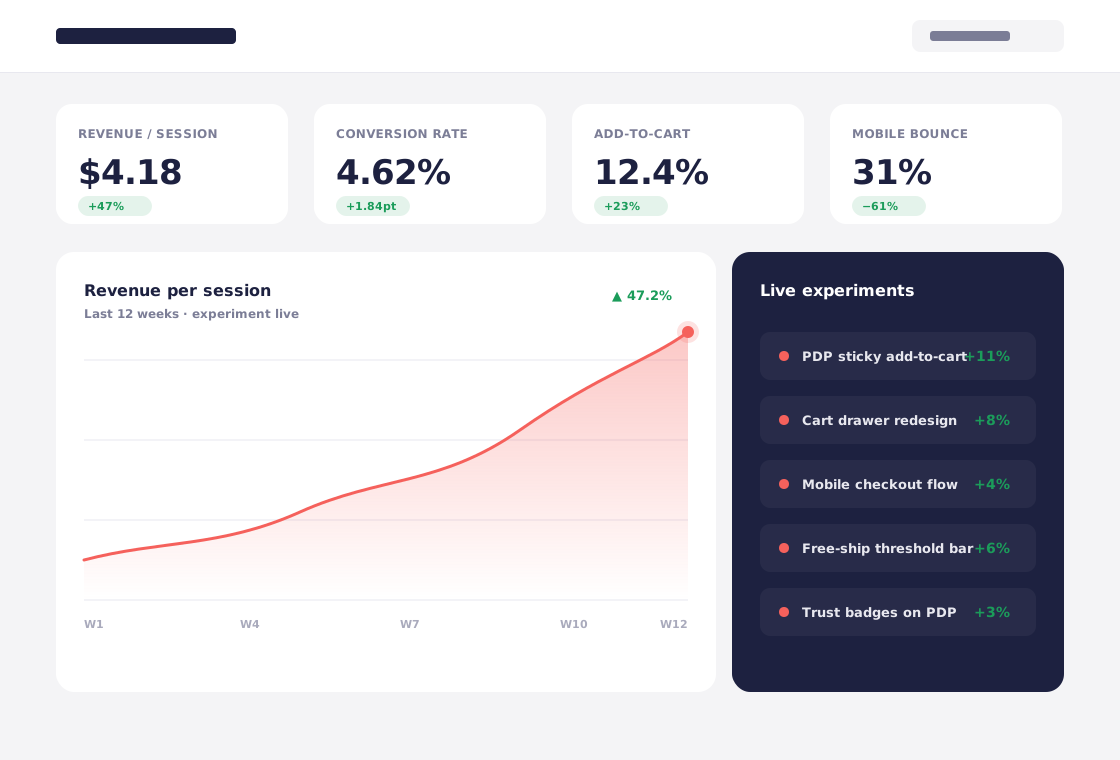
Stop guessing what's hurting conversion. Every change we ship is backed by analytics, session replays, and a hypothesis- not a hunch.
Funnel analysis & drop-off mapping
Heatmaps and session replays
A/B test design & statistical readout

An impact × effort backlog so every two weeks you ship something that moves the needle - not just something that looks busy.
Quarterly roadmap with measurable goals
Weekly standups with your team
Shared Linear board, all in the open

Most teams take a week to push a homepage tweak. We ship multiple experiments a week and report on impact every Friday.
Same-week turnaround on most tickets
No-tickets-lost Slack channel
Weekly written progress reports
Pick CRO when you want to grow revenue from the same traffic. Pick Maintenance when you want a calm, fast, always-on Shopify store.

A page-by-page teardown of your storefront with a prioritized, written list of fixes - ranked by impact and effort.
Learn more
Monthly experiment design, build, and statistical readout. Two to four live experiments a month with documented learnings.
Learn more
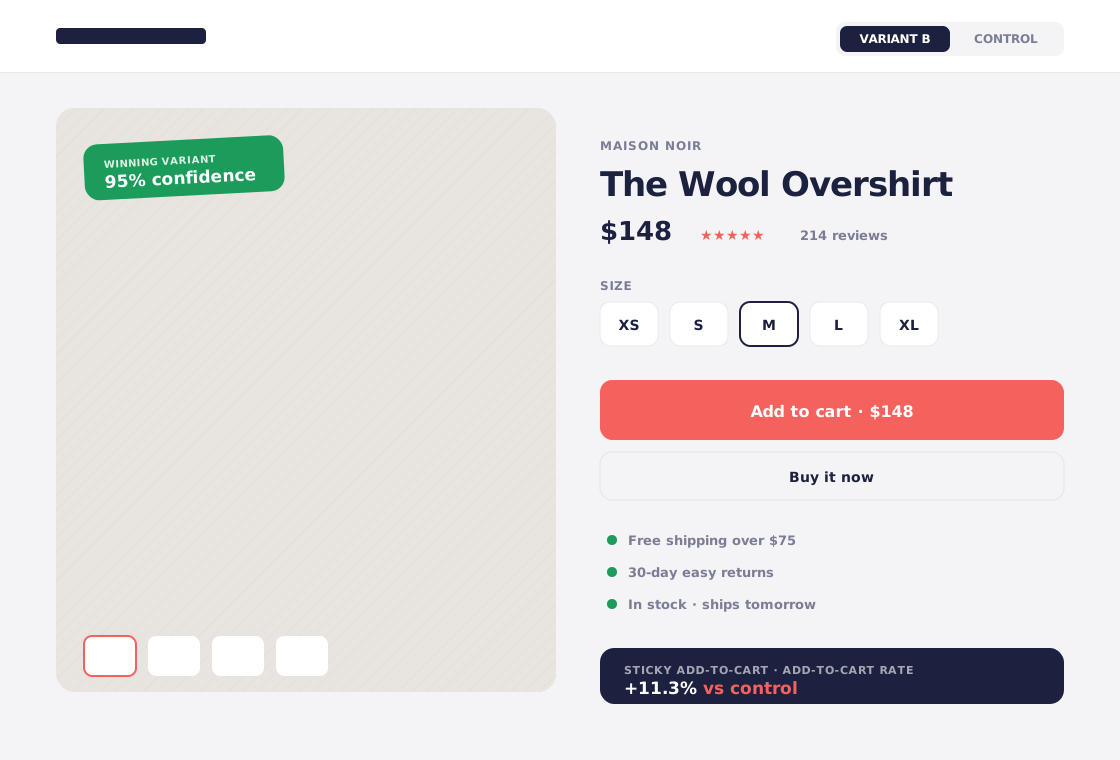
Product page redesigns built around real customer questions, social proof placement, and mobile-first add-to-cart flows.
Learn more
Cart drawer redesign, upsell logic, dynamic shipping thresholds, and a smoother path from"add to cart" to "thank you."
Learn more
Smarter pop-up logic, exit-intent triggers, and Klaviyo flow tuning so you keep more of the visitors you're already paying for.
Learn more
On-site search tuning, collection sort logic, and product badging to make the right product easier to find - and easier to buy.
Learn more
Core Web Vitals tracked across templates, monthly speed reports, and alerts when a deploy or app hurts your scores.
Learn more
Shopify keeps shipping. We keep your theme, sections, and integrated apps in sync — without breaking your storefront.
Learn more
A shared Slack channel and Linear board. File a ticket, we triage it within 24 hours — most are fixed by Friday.
Learn more
GDPR / CCPA banners, accessibility passes, third-party script audits, and quarterly security reviews of your app stack.
Learn more
Holiday landing pages, new collection templates, and campaign-specific sections shipped on your marketing calendar.
Learn more
Quarterly Loom walkthroughs for your team and a living Notion doc of every section, metafield, and integration we maintain.
Learn moreEvery retainer follows the same six-step loop — so you always know what we're doing, what we just shipped, and what's coming next.
We start with a full teardown - analytics, session replays, performance, and conversion path - to set a baseline.
Learn more
Every opportunity gets scored on impact and effort. The top of the list is what we ship first - the rest stays visible.
Learn moreEach experiment starts with a written hypothesis: who's affected, what we expect to change, and how big the win needs to be.
Learn more
Quick Figma mocks, then Liquid & JS in your theme. Most experiments are live within a single two-week sprint.
Learn more
Live A/B test, statistical readout, and a written summary of what worked, what didn't, and what we're trying next.
Learn moreWinners ship sitewide. Losers get documented. Friday afternoon you get a written report - not a dashboard to figure out.
Learn moreTwo flavors, both delivered in two-week sprints. CRO retainers are built around experiment velocity. You pick a sprint cadence (typically 2–4 experiments per month) and we handle hypothesis design, build, launch, and statistical analysis. Maintenance retainers are built around scope. You allocate hours (typically 40–80/mo) and we ship everything from theme updates and bug fixes to new landing pages and performance optimization. Most clients run them in parallel; some start with one and layer in the other as growth accelerates.
Every two weeks, we ship 1–2 live experiments. Week one: you pitch ideas or we pull from the audit backlog, we write a hypothesis (who it affects, what we expect, what counts as a win), and Figma a quick mock. Week two: it's live, running on real traffic. Friday you get a written report: statistical significance, conversion delta, revenue impact, and what we test next. No dashboard debt, no vague "the test ran." Everything is documented in ClickUp so your team sees velocity and impact stacking up in real time. This compounds. Month one you might see +3% CVR, month three you're at +12% because iterations build on learnings.
You get 40–80 hours per month (depending on your plan), and we scope the sprint before it starts. Monday you have a Linear board with the next two weeks ranked by impact × effort. Everything from a Shopify update that broke your cart, to a new holiday collection template, to a Core Web Vitals audit lives there with estimated hours. You can reorder, add, or pause; we just ship the highest-priority items that fit your hours. No surprise invoices, no half-finished work rolling over. And any blocking issue (a deploy goes wrong, a customer finds a bug) gets triaged in Slack within 24 hours, most fixes ship by Wednesday.
One test: do you have traffic? If you're under ~30K monthly sessions, structured A/B testing wastes money because you won't reach statistical significance. Start with maintenance, fix the obvious friction and performance issues. Then layer CRO in once you have volume. If you have traffic but your store feels dated or broken, ask yourself: 'Would a redesign fix this, or is it just slow/confusing?' Redesign = maintenance. Want to squeeze more revenue from what you have = CRO. Most brands we work with do both, but that's after month two or three, not day one.
For CRO: first sprint is always your free audit. We session-replay your customer journeys, pull GA4 funnel data, and generate a backlog scored on impact (estimated CVR lift) × confidence (how sure we are it'll work) × effort (dev complexity). Top of the list ships first. For maintenance: we do the same audit-driven backlog, but we also pull in your wish list. If your marketing team has been asking for a quiz page, that goes in the mix weighted against "Core Web Vitals are tanking." Then we fit the highest-impact work into your monthly hours. Every two weeks the priority list updates based on what shipped and what new data emerged.
Traffic volume is the real variable. If you're 50K+ sessions/month, first tests hit significance in 2–3 weeks. If you're 20K, expect 4–6 weeks for a conclusive read. But here's the thing: winners compound fast. First month looks small (+2–3% CVR). Month three you're at +8–12% because we're stacking learnings. That landing page redesign we shipped in week 4 is feeding traffic to the PDP test from week 8, etc. On maintenance, you'll see Core Web Vitals improvements the sprint you fix bloated apps and asset optimization. Performance is fast; revenue usually takes two months of iterated changes to become obvious.
Yes, and it's actually smart if you have the budget. Think of it this way: maintenance is your baseline, keeping the store fast and current so experiments work on solid ground. CRO is your growth lever. A lot of our clients start with maintenance for month one (fix the obvious stuff, get a performance baseline), then add CRO in month two. After a few months of stacked improvements, some teams drop back to maintenance-only while they absorb the changes. Others stay in both indefinitely because the compounding revenue justifies it. It's genuinely flexible and your monthly hours and test budget are separate line items.
You get one point person, someone with CRO chops who you'll see at kickoff, bi-weekly standups, and every Friday report. Behind them: a rotating CRO strategist (who owns hypothesis + statistical wins/losses), a designer (who mocks the concepts), and a developer (who ships them). Unlike larger agencies with handoff culture, it's usually 2–3 people who stick with your project. You're not a ticket in a queue; you're a known entity. And everyone from PM, strategist, designer to dev live in your ClickUp board and Slack channel, so you see work moving in real time instead of waiting for status updates.
Three months gets you through at least one full hypothesis cycle . Audit, backlog, 3–4 tests or maintenance sprints shipped, measured, documented. If you want to pause after three months, 30 days' notice and you're out. If you lock in for a year, you get 15% off the monthly rate. We're confident in the work, so we aren't nervous about commitment length.
Ready to grow?
Let's talk about your project. We'll get back to you within 24 hours.